The marketing mix place strategy is about how an organisation will distribute their product or service to the end user. The organisation must distribute the product to the user at the right place at the right time. Efficient and effective distribution is important if the organisation is to meet its overall marketing objectives. If an organisation underestimates demand, profitability will be affected.
What Marketing Mix Distribution Channel Can Firms Use?
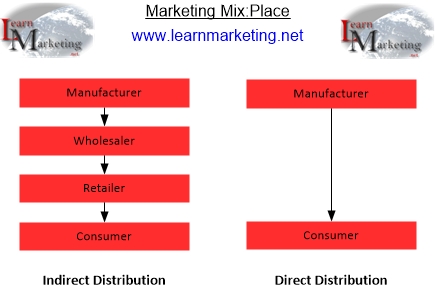
The diagram below explains the two distribution channels and the parties involved in the distribution chain.
There are two channels of distribution available to firms. Direct distribution and indirect distribution
Indirect Distribution
Indirect distribution involves distributing your product by the use of an intermediary for example a manufacturer selling to a wholesaler and then on to the retailer.
Direct Distribution
Direct distribution involves distributing direct from the manufacturer to the consumer For example Dell Computers providing directly to its target customers. The advantage of direct distribution is that it gives a manufacturer complete control over their product
Place and Distribution Intermediaries Defined
Manufacturer: Person, group or firm that makes the product.
Wholesaler:
The party that buys large quantities of a product from manufacturers and sells it to retailers. Wholesalers sell goods to other businesses, they do not sell directly to consumers.
Retailers:
The organisation that sells products directly to consumers and end users. As they are selling to consumers for personal use, the goods are usually sold in small quantities.
Place and Distribution Strategies
The three most common distribution strategies are discussed below
Intensive Distribution: Used commonly to distribute low priced products or impulse purchases. For example snacks such as chocolates, soft drinks and crisps
Exclusive distribution: Involves limiting distribution to a single outlet. The product is usually highly priced, and requires the intermediary to place much detail in its sell. An example of would be the sale of vehicles through exclusive dealers.
Selective Distribution: A small number of retail outlets are chosen to distribute the product. Selective distribution is common with products such as computers, televisions household appliances, where consumers are willing to shop around and where manufacturers want a large geographical spread.
If a manufacturer decides to adopt an exclusive or selective distribution strategy they should select reputable intermediaries, experienced in distributing similar products and an intermediary known to the target audience.
Summary
Marketing Mix Place and Distribution strategy is about how effectively a firm gets its product to consumers and end users. Firms can sells their products directly to the consumer (direct distribution) or through intermediaries (indirect distributions). The best marketing mix place method will depend on the product needing to be distributed and the "wants and needs" of the firm's customers.